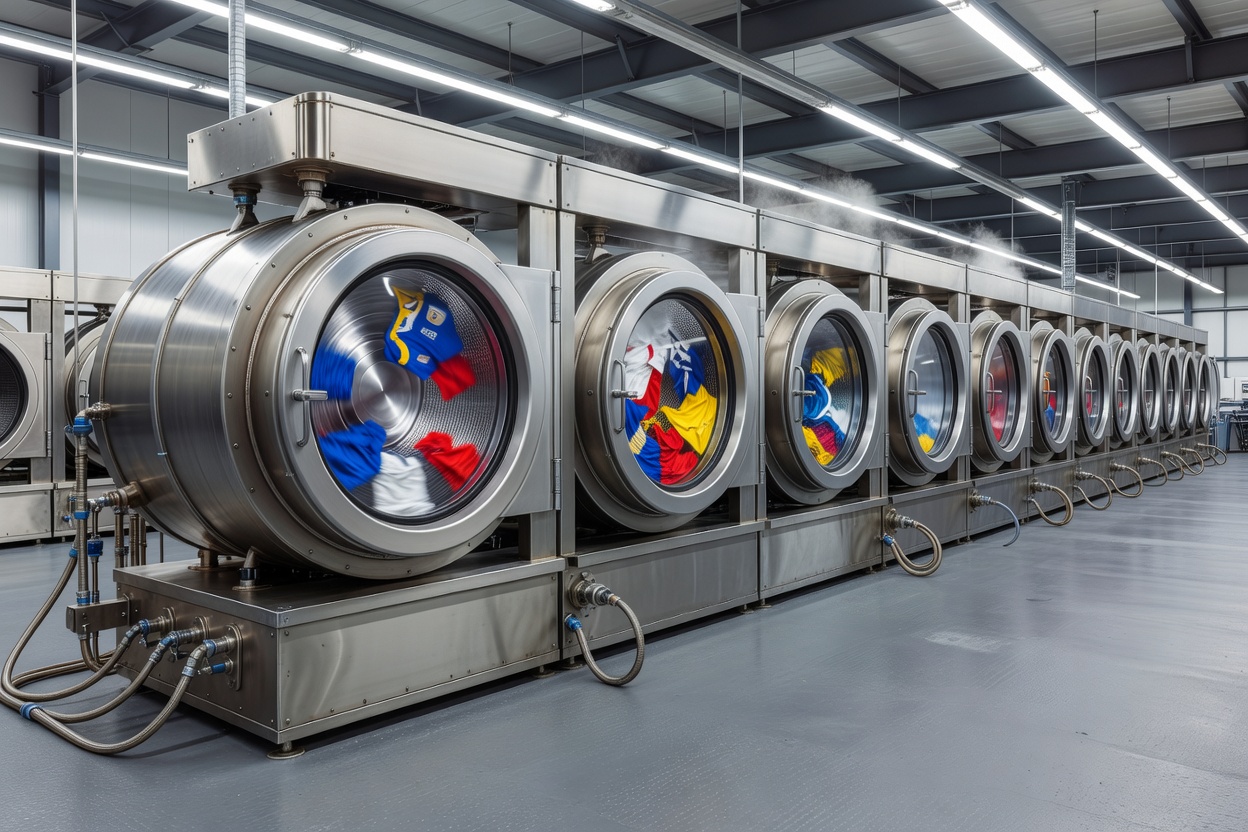
Overview: Why Team Laundry Differs From Standard Facilities
Domestic washers and standard commercial laundry setups operate on generic wash formulas. They run high thermal levels and harsh alkaline detergents designed for heavy cotton hotel sheeting. Athletic kits are synthetic, complex, and fragile. They blend micro-denier polyester, elastane stretch yarns, silicone sleeve cuffs, and heat-welded vinyl numbering.
Our team laundry processing treats sportswear as technical equipment. We isolate team lots by squad rosters, preventing mixed items and eliminating cross-contamination between training levels. Each intake receives weight calibration so wash drums never overload, ensuring sufficient liquor ratio for surfactant penetration.
Textile Intake and Piece Verification
Processing begins at the physical transfer dock. Team kit bags are unloaded into dedicated sanitizable roll cages. Intake operators log manifest counts against designated club divisions—such as Senior First XI, Reserve Squad, or Academy groups.
Zippers, hook-and-loop closures, and drawstring cords are secured before drum loading. This mechanical containment prevents snagging on micro-mesh jersey panels and stops drawstring loss within centrifuge cycles. Items needing specialized stain attention are pulled for manual spot classification during intake.
Washing Workflows and Load Mechanics
Washing athletic textiles requires mechanical gentleness coupled with targeted chemical delivery. High mechanical agitation stretches synthetic fibers, degrading seam tension over time. We utilize low-action drum mechanics with high water volume ratios.
Water temperature stays strictly monitored. High heat cooks protein soil from blood, mud, and grass directly into synthetic weaves, causing permanent discolouration. Our wash cycles operate with staged thermal ramps: a cold pre-rinse to flush gross particulates, followed by a controlled warm detergent wash, and three comprehensive extraction flushes.
Key Processing Parameters
- Liquor Ratio: 1:6 to 1:8 garment weight to water volume ratio for complete particulate suspension.
- Thermal Range: Staged between 30°C and 40°C depending on fabric fiber labels and emblem bonding limits.
- Chemical Dosing: Enzyme-rich liquid concentrates dosed electronically by computerized intake weights.
- Centrifuge RPM: Ramped G-force spin extraction calibrated to eliminate moisture without creasing heat-pressed player fonts.
Drying Considerations and Separation
After extraction, items are transferred to moisture-controlled tumblers or warm-air flow chambers. Elastane filaments snap when subjected to conventional laundry dryer temperatures. Once snapped, jersey armbands lose tension, causing irreversible garment distortion.
Our dryers cycle filtered intake air through constant humidity sensors. Drums stop as soon as moisture reaches 4–6% relative content. This halts fabric desiccation, protects heat-sealed sponsor logos, and leaves textiles soft without requiring silicone-based fabric softeners that clog moisture-wicking capillary channels.
Step-by-Step Operational Sequence
| Stage | Action | Control Standard |
|---|---|---|
| 1. Receiving | Bag scan and manifest verification | Squad containment verified |
| 2. Sorting | Color, soil, and fabric classification | Polyester separated from heavy fleece |
| 3. Pre-Flush | Cold water particulate rinse | Loose turf and sand extracted |
| 4. Main Wash | Enzymatic low-alkali detergent cycle | Maintained below 40°C |
| 5. Neutralization | Acid-neutralizing balance rinse | pH verified between 6.0 and 6.8 |
| 6. De-Moisturize | Controlled thermal flow drying | Relative humidity cutoff sensor active |
Common Operational Pitfalls We Avoid
Standard commercial laundries often make three critical mistakes with athletic kits:
- Alkaline Detergent Bleaching: Cheap commercial detergents rely on optical brighteners and high pH bleaches. These bleach out club colours, turning navy blue to dull purple and high-vis neon into murky yellow.
- Drum Overfilling: Packing machines past 80% volume creates dry friction spots, causing pilling on outer jersey chests and tearing numbering corners.
- Excessive Heat Baking: Tumbler temperatures above 60°C liquify polyurethane adhesives, resulting in peeled sponsor letters and curling club badges.
Scope and Practical Limitations
Team laundry processing focuses on rapid, hygienic, and safe turnaround of match and training clothing. It does not replace equipment armory maintenance (such as molded plastic shoulder guards or spiked footwear). Turnaround availability depends on squad volume and scheduled logistics windows agreed during operational onboarding.
Good For
- Matchday kit turnovers between weekly fixtures.
- Daily training kit cycles for senior and reserve squads.
- Eliminating kit loss across multi-team training facilities.
- Preserving heat-pressed team names and sponsor prints.
What to Know
- Turnaround scheduling must be booked prior to match schedules.
- Heavily damaged garments are flagged, not remanufactured.
- Non-textile gear (shin guards, boot studs) must be separated before bag handoff.